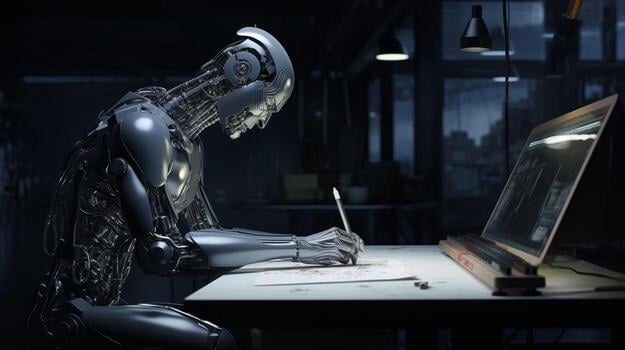
Why AI Can’t and Won’t Take Over Technical Writing Jobs
Artificial Intelligence is transforming industries at an unprecedented pace. From generating code to creating marketing content, AI tools appear to be everywhere. Naturally, this raises a pressing question:
Is technical writing next?
The short answer: No.
AI supports technical writing, but it does not replace it.
Let’s break down why.
1. Technical Writing Is Not Just Writing—It’s Thinking
Technical writing is often misunderstood as simple documentation. In reality, it is:
Understanding complex systems
Interpreting ambiguous inputs
Structuring information logically
Anticipating user questions
AI generates text based on patterns. It does not truly understand the system, the product, or the user’s intent.
A technical writer bridges the gap between engineering complexity and user clarity—something that requires human judgment, not just language generation.
2. Context Is Everything—and AI Lacks Real Context
AI tools work on trained data and prompts. They do not have:
Deep product knowledge
Access to evolving internal decisions
Awareness of undocumented edge cases
Real-time collaboration with teams
In contrast, technical writers:
Sit in product discussions
Ask the right questions
Challenge unclear requirements
Capture nuances that never exist in formal specs
Without context, documentation becomes generic—and generic documentation fails users.
3. Accuracy and Accountability Matter
In technical documentation, accuracy is non-negotiable.
A small mistake can:
Break an implementation
Cause system failure
Increase support costs
Damage brand credibility
AI:
- Can hallucinate facts
- Can produce outdated or incorrect information
- Cannot be held accountable
Technical writers:
- Validate information with SMEs
- Test workflows
- Take ownership of correctness
This level of responsibility requires human oversight.
4. Collaboration Is a Human Skill
Technical writing is deeply collaborative. Writers constantly interact with:
- Developers
- Product managers
- QA teams
- Support teams
They:
- Clarify gaps
- Resolve conflicts
- Align documentation with business goals
AI cannot:
- Negotiate meaning
- Interpret tone in discussions
- Drive alignment across teams
Documentation is not created in isolation—it is built through conversations.
5. User Empathy Cannot Be Automated
Great documentation is not just correct—it is usable.
Technical writers think like users:
- Where does the user struggle?
- What assumptions are confusing?
- What needs simplification?
AI generates what is probable, not what is helpful.
Empathy—understanding frustration, confusion, and intent—is a human strength that AI does not possess.
6. Structure, Strategy, and Information Design
Technical writing involves:
- Information architecture
- Content strategy
- Documentation lifecycle planning
It answers questions like:
- What should be documented?
- In what order?
- For which audience?
- At what depth?
AI can generate sections of content. It does not design documentation ecosystems.
7. AI Still Needs Skilled Writers
Ironically, the rise of AI increases the need for good technical writers.
Why?
Because someone needs to:
- Review AI-generated content
- Correct inaccuracies
- Add missing context
- Ensure consistency and tone
AI becomes a tool, not a replacement.
Writers who learn to use AI effectively become faster and more valuable—not obsolete.
8. The Future: AI + Technical Writers
The future is not “AI vs Technical Writers.”
It is AI + Technical Writers.
AI helps with:
- First drafts
- Summarization
- Repetitive content
- Formatting
Technical writers handle:
- Accuracy
- Clarity
- Context
- Strategy
This combination leads to better documentation, delivered faster.
Final Thoughts
AI changes how technical writing is done—but not who does it.
As long as products remain complex and users need clarity, technical writers continue to play a critical role.
The real shift is this:
Technical writers who embrace AI stay ahead.
Those who ignore it fall behind.
AI does not replace technical writers.
It amplifies the best ones.
